Chlorothalonil TC: Identity, Quality and Bulk Procurement | WECON
TL;DR — Chlorothalonil is the old multi-site protectant that still anchors potato, vegetable and turf programmes — but the EU did not renew it in 2019, so the destination registration decides the deal before price does.
In this article
Discuss your active ingredient, specification, quantity and destination.
Request a sourcing quoteChlorothalonil has been protecting wheat, potatoes, vegetables and turf for more than half a century, and it is still one of the highest-volume fungicides in the world. That longevity is the point: it is a multi-site protectant, so it works by hitting the fungus in several places at once rather than a single biochemical target. For a buyer, that history cuts both ways. The molecule is well understood, the specifications are settled, and supply is deep. But the regulatory map has shifted underneath it, and the first question in any chlorothalonil enquiry is no longer price — it is where the material may legally be used.
Substance identity
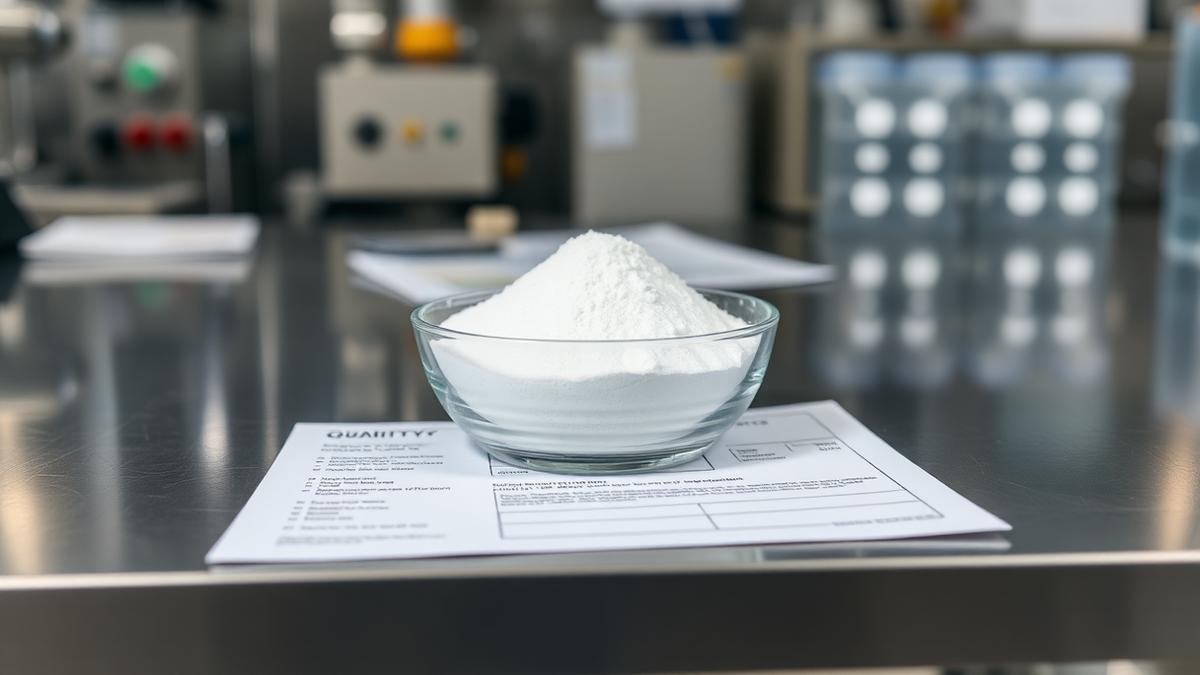
The ISO common name is chlorothalonil, CAS 1897-45-6, molecular formula C8Cl4N2, relative molecular mass 265.9. The IUPAC name is tetrachloroisophthalonitrile. Technical material is an off-white powder, and FAO Specification 288/TC (October 2015) requires a declared chlorothalonil content of not less than 985 g/kg. In trade, 98% TC is the standard grade, with 75% WP, 500 g/L SC and 720 g/L SC the common formulations. Put the CAS, the formula and the FAO reference on the enquiry itself: chlorothalonil has no isomer argument to settle, but it does have a naming trap — older trade names such as Bravo and Daconil still circulate, and a quote that cites only a brand name tells you nothing about the technical grade behind it.
The EU question comes first
The European Commission did not renew chlorothalonil's approval in 2019 (Commission Implementing Regulation (EU) 2019/677), and its EU authorisation expired on 31 October 2019, with member states withdrawing products by 2020. The stated reasons were carcinogenicity concerns and groundwater metabolites predicted above the EU's 0.1 µg/L limit. That does not make the molecule unsaleable — it remains registered and widely used in the United States, Brazil and many markets across Asia, Africa and Latin America. It does mean the destination decides the deal. Before any price discussion, confirm the registration status in the destination market, and confirm that the formulation you plan to make is covered by a live registration there. A buyer who sources first and checks later owns a drum they cannot legally sell.
Quality acceptance: what the COA must show
Start with the assay on a declared-content basis — 985 g/kg minimum under the FAO specification — and ask for the analytical method alongside the number. Then look at the two impurities the FAO specification singles out: hexachlorobenzene (HCB) and decachlorobiphenyl (DCB). Both are capped at low levels, and a supplier who cannot report them is a supplier who has not run the full specification. Ask for the five-batch analysis, the particle-size data if you are milling a WP or WDG, and the storage-stability data for the formulation you intend. Chlorothalonil is a low-solubility powder — about 0.81 mg/L in water at 20 °C — so wetting, dispersion and suspensibility matter more than they do for a soluble active, and the COA alone will not tell you whether a lot disperses cleanly in your mill. A 200–500 g trial sample through your own formulation line is the cheapest insurance in the whole purchase.
Formulation fit
The workhorse formats are 75% WP and the suspension concentrates at 500 and 720 g/L. SC dominates where dust and operator exposure matter; WP still wins where the formulator wants a dry, long-shelf-life pack and has the milling and packaging line to handle it. Chlorothalonil is almost always a protectant applied before infection, and it is a standard partner in mixtures — with a triazole such as tebuconazole or difenoconazole, or with a strobilurin such as azoxystrobin — where the partner brings curative or systemic activity and chlorothalonil brings the multi-site backbone that slows resistance. If your programme is built on solo triazoles, a chlorothalonil partner is the cheapest resistance-management tool you can buy; if your market has already restricted chlorothalonil, that same mixture is a non-starter, so the registration check comes before the formulation plan.
Where it earns its place — and where it does not
Chlorothalonil's value is its FRAC M05 multi-site mode of action: resistance to it is rare, which is why it still anchors spray programmes on potatoes, peanuts, vegetables and turf after decades of use. It is a protectant, not a curative — applied after infection it does little, and it does not move inside the plant, so coverage and timing carry the result. Compare it with mancozeb, the other big multi-site protectant: mancozeb is an EBDC with its own residue and regulatory questions, and the choice between them usually turns on the crop, the disease spectrum and which one holds a live registration in the destination. Neither is a substitute for the other on price alone.
Quote and shipment planning
Compare offers on the same basis: declared content, impurity limits, pack size and the documents included. Technical material ships as a powder in 25 kg bags or drums; confirm the transport classification on the source SDS rather than assuming it from the active name, and confirm shelf-life and storage conditions in writing. MOQ, sample charges and production readiness are source-specific and confirmed in the written offer — as is the registration documentation. WECON supplies chlorothalonil technical material subject to confirmation item by item: the specification, the source, the destination registration and the document set are all confirmed before a firm price is issued. Send the specification, quantity, destination and document needs through the buyer guide, and check the registration position in your market first — our Turkey registration guide explains how the source named on a registration shapes everything that follows.
Frequently asked questions
What is the FAO specification for chlorothalonil TC?
FAO Specification 288/TC (October 2015) covers chlorothalonil technical material, requiring a declared content of not less than 985 g/kg, with identity tests and limits on relevant impurities including hexachlorobenzene and decachlorobiphenyl.
Is chlorothalonil banned in the EU?
The EU did not renew its approval in 2019 under Regulation (EU) 2019/677, and its authorisation expired on 31 October 2019. It remains registered in other major markets, including the United States and Brazil — check the destination market's live registration before ordering.
What formulations are made from chlorothalonil TC?
The common formats are 75% WP and suspension concentrates at 500 g/L and 720 g/L SC, plus water-dispersible granules. It is a protectant fungicide, usually applied before infection and often mixed with a triazole or strobilurin partner.
What should a chlorothalonil TC enquiry include?
State the CAS (1897-45-6), the declared content basis, the HCB and DCB impurity limits, quantity, trial sample needs, pack preference, destination port and the documents you need. Confirm the destination registration first, because it decides whether the purchase can proceed at all.