Difenoconazole TC: Identity, Quality and Bulk Procurement | WECON
TL;DR — Difenoconazole is the triazole most buyers order without a second thought — a broad-spectrum fungicide with a short specification sheet and a familiar name. The details that matter are the isomer mix, the impurity profile and the source named on the registration, and they only show up when a formulation or a file goes wrong.
In this article
Discuss your active ingredient, specification, quantity and destination.
Request a sourcing quoteDifenoconazole does not look like a difficult purchase. It is one of the most widely used triazole fungicides in the world, the technical grade is a white to off-white powder, and the specification sheet fits on half a page. That is exactly why buyers get caught out: the molecule is familiar, so the order goes through on the name alone, and the differences that matter — the isomer mix, the impurity profile, the source named on the registration — only surface when a formulation fails a stability test or a registration file comes back with questions.
The identity is straightforward to check, and it is the first thing to put in writing. Difenoconazole is CAS 119446-68-3, C19H17Cl2N3O3, molecular mass 406.26. It is a mixture of diastereomers — the (2RS,4RS) and (2RS,4SR) forms — and the ratio between them is part of what a specification describes, not a detail to leave to chance. In practice most trade runs at 95% TC, which is the grade most formulators build their emulsifiable concentrates and water-dispersible granules around. If a supplier quotes a different content, ask which specification it is measured against, and get the number in the contract, not just on the offer sheet.
What the grade actually decides
A 95% technical is the industry workhorse, and for good reason. Difenoconazole 250 g/L EC is the standard formulation route, and it is usually built from the 95% grade with a known solvent and emulsifier package. The same technical feeds 10% and 25% WDG, 400 g/L SC and seed-treatment flowables, and it is one of the most common mixture partners in the triazole family — paired with azoxystrobin, propiconazole and tebuconazole in ready-mix fungicides for cereals, fruit and vegetables. The grade matters because the formulation does not forgive a sloppy technical: a batch with the wrong isomer balance or a high level of residual solvent can pass a content assay and still fail an emulsion stability or cold-storage test months later.
The molecule's behaviour explains both its value and its handling rules. Difenoconazole is a DMI triazole, FRAC group 3, working by inhibiting sterol 14-alpha-demethylation in the fungus. It is systemic, with protective and curative activity and a long residual window, which is why it shows up in programmes against leaf spots, powdery mildew, rusts and scab across wheat, rice, fruit and vegetables. It is barely soluble in water — around 15 mg/L at 25 °C — and melts at about 76 °C, so storage is simple: dry, cool, out of direct sun. The low water solubility is also the reason formulators pay attention to the solvent system in ECs and to the dispersant package in WDG and SC.
The checks that catch the expensive mistakes
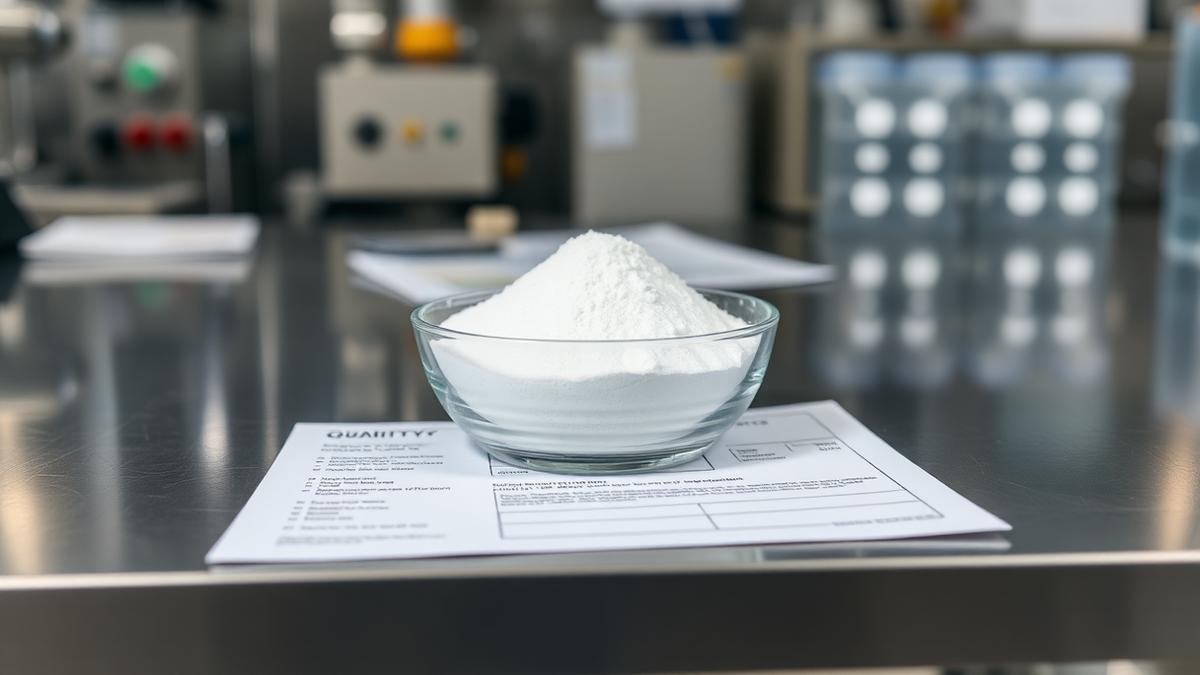
The first check is the COA, and not just the headline number. A difenoconazole COA should show the content by HPLC, the appearance, loss on drying, pH and acetone-insoluble matter — and the batch number on that COA must match the batch number on the drums that arrive. Ask for the COA of the batch you are actually buying, not a representative COA from a previous lot. If the supplier cannot produce a batch-specific COA before shipment, the price advantage is not worth the risk.
The second check is the impurity profile. Two technicals can both assay at 95% and still behave differently in a formulation, because the remaining 5% is not the same in both. Ask the supplier for the impurity profile and the analytical method behind it, and compare it against the profile on the registration file for the market you are supplying. Where a registration names a specific source, a technical from another source is not automatically equivalent — equivalence is a documented assessment, confirmed item by item, not an assumption.
The third check is the paperwork that travels with the goods. Difenoconazole shipments need the same file discipline as any other technical: a commercial invoice that matches the contract, a packing list, the COA, the MSDS, and the certificate of origin where the destination requires it. The product name on every document should be the same — "Difenoconazole 95% TC", not a trade name on one paper and the common name on another. A mismatch between the invoice and the registration name is the kind of small inconsistency that holds a shipment at the border while the season moves on.
Buying it as part of a programme, not a single order
Difenoconazole is rarely bought alone. Most buyers order it alongside the other triazoles in their programme — our guides on tebuconazole, propiconazole and azoxystrobin cover the same checks for the molecules it is most often mixed with. Ordering them together from one source simplifies the file: one registration source, one COA format, one set of shipping documents. But it also concentrates the risk, so the due diligence on the source matters more, not less.
The practical rule is simple. Confirm the identity in writing — CAS, formula, isomer mix, declared content and the specification it is measured against. Get a batch-specific COA before the goods ship. Check the impurity profile against the registration file for your market. And keep the source, the specification and the market on the same page from the first enquiry to the last document. A buyer who does those four things buys difenoconazole the way it should be bought: as a known quantity, from a known source, for a known market. If you are planning an order and want the specification checked against your formulation and your registration file, send WECON the technical grade, the target formulation and the destination market through the enquiry form.
Frequently asked questions
What is the CAS number of difenoconazole?
Difenoconazole is CAS 119446-68-3, with the molecular formula C19H17Cl2N3O3 and a molecular mass of 406.26. It is a mixture of the (2RS,4RS) and (2RS,4SR) diastereomers.
What grade of difenoconazole is traded most?
Most trade runs at 95% TC, a white to off-white powder. It is the grade most formulators use to build 25% EC, 10% and 25% WDG, 400 g/L SC and seed-treatment flowables.
What should a buyer check on the COA?
The content by HPLC, appearance, loss on drying, pH and acetone-insoluble matter — and that the batch number on the COA matches the batch number on the drums. Ask for the COA of the batch you are actually buying.
Is difenoconazole the same as propiconazole or tebuconazole?
No. All three are DMI triazole fungicides in FRAC group 3, but they are different molecules with different CAS numbers, spectra and formulation behaviour. Difenoconazole is often mixed with them, not a substitute for them.