Importing Pesticide Technicals into Pakistan: The Form-16 Generic Import Permission | WECON
TL;DR — Pakistan's Form-16 is the door for generic-name pesticide technicals: no trade name, no field trials, but a manufacturer file that has to be exact — and a CCPIT endorsement for Chinese sources.
In this article
Pakistan has three doors into its pesticide market, and buyers who pick the wrong one lose months. Form-1 registers a product under a trade name and requires field trials. Form-17 registers a product that is already registered abroad under a brand name, without trials. Form-16 is the third door: permission to import a pesticide that has no trade name at all, under the generic scheme. It is the route most technical-material shipments actually use — and it is also the route where files most often come back, because the paperwork has to match the manufacturer's own registration exactly.
What Form-16 actually is
Form-16 is the permission to import a pesticide not having a trade name, under Rule 9A of the Agricultural Pesticides Rules 1973, introduced with the liberalised import policy of 1992. The federal government has notified a list of pesticides eligible under the generic scheme — the Department of Plant Protection's own presentations put the notified list at 139 pesticides — and only a molecule on that list can come through this door. If the active you want is not on the notified list, Form-16 is not your route, and no amount of paperwork will make it one. The permission itself is granted as an import permission certificate on Form-16, valid for three years or a shorter period. Note what it is not: it is not a registration under a brand, and it does not exempt the shipment from the rest of the import rules — every consignment must still match the application, be packed and labelled under the Rules, and come from an importer with proper storage.
Who can apply
The importer needs storage facilities that are open to inspection by the Department of Plant Protection or the provincial government, and retail packing facilities unless the importer is a co-operative society or an individual user of pesticides. Under the Rules, a company importer needs a minimum paid-up capital of one million rupees; an individual needs capital investment of half a million. The practical point: the warehouse and the repacking line have to exist before the application goes in, not after the permission arrives.
The file the manufacturer must supply
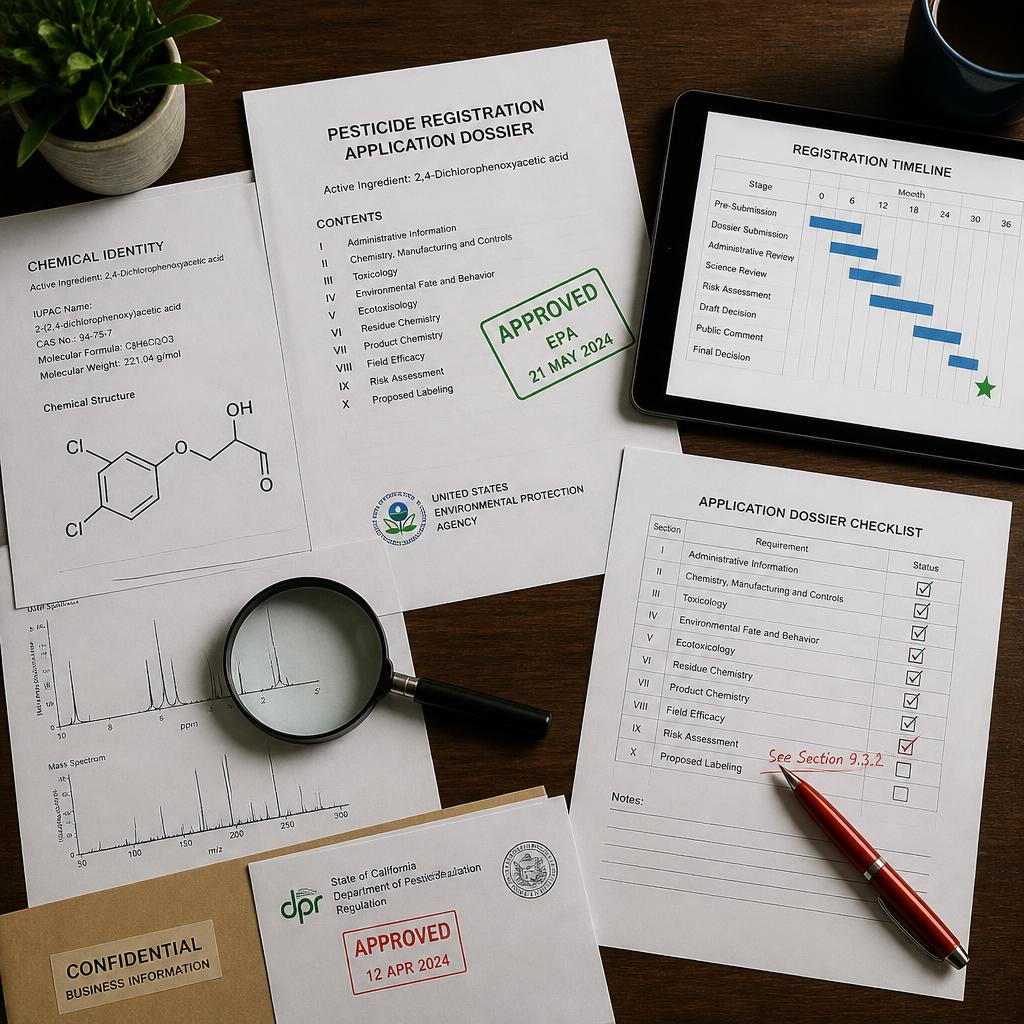
Most of the Form-16 file comes from the manufacturer in the country of origin, and it is longer than most buyers expect. The checklist is: an authorisation letter from the manufacturer; the 100% break-up, recipe and specification of the formulated product, from an internationally accredited or GLP laboratory; the 100% break-up, composition and specification of the technical grade material as registered with the registration authority in the country of origin; MRL data and the pre-harvest interval; toxicological study data from an accredited or GLP laboratory; and the registration certificate of the formulated product or technical material — or proof of manufacturing — issued by the registration authority in the country of origin. Every one of these documents must be endorsed by the Pakistan embassy in the country of manufacture — except for China, where the endorsement comes from the China Council for the Promotion of International Trade (CCPIT). That single line is where Chinese-sourced files most often stall: the CCPIT endorsement has to be arranged before the file goes in, not chased after DPP asks for it. Samples travel separately and directly: the formulated product at 1 kg or 1 litre, the technical material at 0.5 to 1 kg, and the analytical standard at 2 to 5 g, submitted to the Federal Pesticides Testing and Reference Laboratory (FPTRL) of DPP directly from the manufacturer.
What happens after filing
DPP examines the file, FPTRL analyses the samples, and if both pass, the import permission certificate is issued on Form-16 for three years or a shorter period. The permission also carries an undertaking: after the import, the importer supplies the details of the import and the deliveries made to various dealers to the provincial government, with intimation to DPP. Build that reporting into your delivery paperwork from the first shipment, so renewal is a routine rather than a scramble.
The buyer's checklist before ordering
Before you place the order, run these checks in this order. First, confirm the molecule is on the federal government's notified generic list — ask DPP or your local partner for the current list rather than relying on an old one. Second, confirm the technical specification matches the material as registered in the country of origin, word for word; a TC assay that differs from the origin registration is the single most common mismatch. Third, confirm the CCPIT endorsement (for Chinese sources) or embassy endorsement is in hand. Fourth, confirm the samples have been sent to FPTRL directly from the manufacturer. Fifth, confirm your storage and packing facilities are inspection-ready. Sixth, line up the order timing with the three-year permission window, so you are not shipping against a permission that expires mid-season. Our guide to registering pesticide technicals in Pakistan covers the Form-1 and Form-17 routes for comparison; Egypt's ACID checklist and Brazil's MAPA guide show the same pattern — the shipment file and the product file have to agree before the goods move.
Where files usually fail
Three failures account for most Form-16 delays. The first is a specification mismatch: the TC offered by the factory is not the TC as registered in China, so the file contradicts itself. The second is a missing endorsement — the CCPIT step skipped because nobody owned it. The third is samples routed through the importer instead of direct from the manufacturer. None of these is a problem with the molecule — all three are problems with who prepared the file, and in what order. If you are planning a Pakistan order and want the file checked against your product and your company setup, send WECON the technical, the destination port and your registration status through the buyer guide — the manufacturer file is confirmed item by item before any firm price is issued.
Frequently asked questions
What is Form-16 in Pakistan?
Form-16 is the permission to import a pesticide that has no trade name, under the generic scheme in Rule 9A of the Agricultural Pesticides Rules 1973. The import permission certificate is granted for three years or a shorter period.
Which pesticides can be imported under Form-16?
Only pesticides notified by the federal government under the generic scheme — the Department of Plant Protection's presentations put the notified list at 139 pesticides. Check the current list with DPP before assuming a molecule qualifies.
What documents does the manufacturer need to provide?
An authorisation letter, the 100% break-up and specification of the formulated product and of the technical material as registered in the country of origin, MRL and pre-harvest interval data, toxicological data, and the registration certificate or proof of manufacturing — all endorsed by the Pakistan embassy, or by CCPIT for Chinese sources.
How long does a Form-16 permission last?
The import permission certificate on Form-16 is granted for three years or a shorter period. Samples are analysed by the Federal Pesticides Testing and Reference Laboratory (FPTRL) of DPP before the certificate is issued.