Tebuconazole TC: Identity, Quality and Bulk Procurement | WECON
TL;DR — Tebuconazole rarely makes headlines and never leaves the order book. It is the triazole backbone of most cereal fungicide programmes — and a molecule that is easy to buy badly if you shop on the name alone.
In this article
Discuss your active ingredient, specification, quantity and destination.
Request a sourcing quoteTebuconazole is one of those molecules that rarely makes headlines and never leaves the order book. It is a triazole fungicide, a DMI — a demethylation inhibitor — that has been in wheat, barley, rice and fruit programmes for decades, and it still turns up in almost every cereal fungicide plan a formulator puts together. The reason is unglamorous: it works, it mixes well, and the registration base behind it is broad. For a buyer, that maturity is both the attraction and the trap. A molecule this established is easy to buy badly.
What the technical actually is
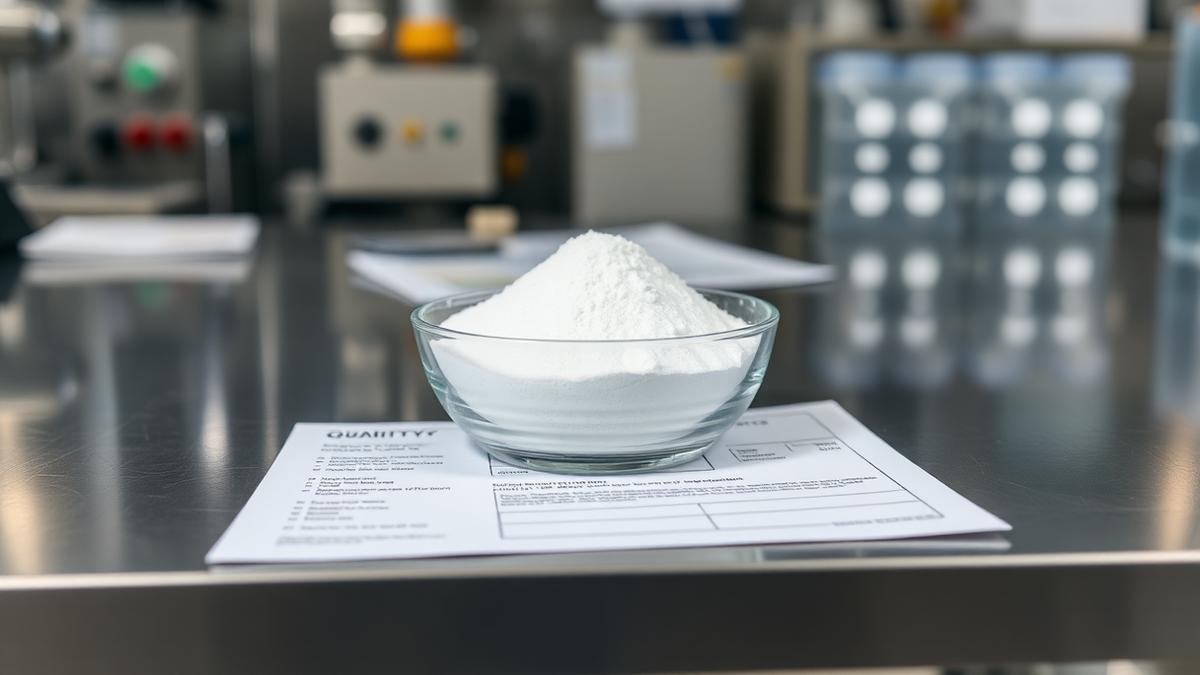
Tebuconazole technical, CAS 107534-96-3, is commonly traded as a 97% TC — a white crystalline powder. That number is the starting point, not the specification. The file that matters is the full one: active content, the impurity profile, and the physical characteristics that decide how it behaves in the mill and the tank. A 97% claim with an undeclared impurity is not a 97% product; it is a registration problem waiting for a laboratory to find it.
Where it goes
The workhorse use is cereals: wheat and barley against rusts and Septoria, rice against sheath blight, and a long list of fruit and vegetable uses. In wheat it is the backbone of many triazole programmes — sometimes alone, often mixed with a strobilurin such as azoxystrobin or a protectant such as mancozeb. It is also a seed-treatment active, dressed onto wheat and barley seed against seed-borne and early foliar disease. That range is why it sits in the catalogues of formulators who serve both the field-spray market and the seed houses. Before ordering, know which of those uses your registration actually covers. A technical bought for a foliar SC is not automatically the right material for a seed-treatment FS, and the formulation route decides the particle size and handling you need.
The formulation routes that decide the spec
Most tebuconazole technical goes into suspension concentrates (SC) and emulsions in water (EW), with water-dispersible granules (WG) and seed-treatment flowables (FS) behind them. The SC route wants a fine, consistent particle and a clean milling behaviour; the WG route wants a powder that granulates without dusting the plant. Ask the formulator which route the batch is for before the order is placed, and write the physical spec into the purchase order. A drum that assays fine but mills badly costs more in lost production days than any saving on the kilogram price.
The checks before you commit
Four checks, in order. First, the source: the technical must match the source named in your registration — same manufacturer, same specification, same impurity profile. Registration data is confirmed item by item, and a source swap after approval is a new file, not a paperwork update. Second, the batch: ask for the CoA, and check the batch against it on arrival rather than filing it. Third, the age and storage: tebuconazole is stable, but a batch that has sat in a hot warehouse for a year is not the batch the CoA describes. Fourth, the season: cereal fungicide buying runs ahead of the disease window, and the wheat season in the big markets starts earlier than most buyers plan for. Turkey's record wheat crop this year means a funded wheat programme next season — and a sourcing calendar that should not wait for spring.
What not to do
Do not buy on the molecule name alone. Tebuconazole from two factories can carry the same CAS number and different impurity profiles, and the registration file cares about the profile, not the name. Do not accept a technical whose data package does not cover your market — a dossier built for one country does not travel. And do not treat the kilogram price as the cost: the cost is the kilogram price plus the registration work, the freight, the milling time and the risk of a batch that fails on arrival. The cheapest drum in the market has a habit of becoming the most expensive lesson of the season.
Our mancozeb guide covers the protectant partner that most tebuconazole programmes pair with, and our Pakistan import guide walks through the registration file a technical order has to match before it ships. The mancozeb product page lists the grade we carry. If you are lining up a volume, send us the target formulation and the registration position and we will work through the specification with you before you commit.
Frequently asked questions
What grade is tebuconazole technical commonly traded at?
97% TC is the commonly traded grade. Always check the full specification alongside the content figure — impurity profile and physical characteristics decide whether the batch mills and formulates cleanly.
Which formulations is tebuconazole technical used for?
Mainly suspension concentrates (SC) and emulsions in water (EW), plus water-dispersible granules (WG) and seed-treatment flowables (FS). The formulation route decides the particle size and handling the batch needs.
Is tebuconazole used as a seed treatment?
Yes. It is dressed onto wheat and barley seed against seed-borne and early foliar disease, as well as sprayed on cereals against rusts and Septoria. Check that your registration covers the use you are buying for.
Can I switch tebuconazole supplier after registration?
Only with a new file. The technical must match the source named in your registration — same manufacturer, same specification, same impurity profile. Registration data is confirmed item by item.