Egypt ACID Pre-Declaration: The File Checklist Before Your Pesticide Shipment Loads
TL;DR — In Egypt the container that gets stuck is rarely the one with a problem in the drums. It is the one whose cargo declaration went in late, or whose documents disagree by one line. The ACID checklist, run before loading.
In Egypt, the container that gets stuck is rarely the one with a problem in the drums. It is the one whose cargo declaration went in late, or whose documents disagree with each other by one line. The ACID pre-declaration is not a formality you clear at the port. It is a gate that closes before the cargo is loaded, and once the vessel has sailed without it, there is no way to fix the file from the quay. This is the checklist we run through with buyers before a pesticide technical shipment leaves for Egypt — the same items, in the same order, every time.
What ACID is, in one paragraph
Egypt runs the Advance Cargo Information system, ACI, on the NAFEZA single window, under Ministry of Finance Decree 38 of 2021. For each shipment, the Egyptian importer obtains an ACID number — the Advance Cargo Information Declaration — and the foreign exporter registers on CargoX and files the cargo data against that number. Every shipping document must carry the ACID number before the goods are loaded. Sea freight has run on ACI since October 2021, and air cargo joined from 1 January 2026, so the rule now covers both routes a technical shipment is likely to take. No ACID, no loading. That is the whole rule, and it is enforced at the load port, not at Alexandria.
The checklist, line by line
First, the importer. Confirm the Egyptian buyer is registered with the General Organization for Export and Import Control, GOEIC, and that the product sits inside the scope of the commodity groups that registration covers. Under Ministerial Decree 271 of 2026, in force since 22 July 2026, importer registration carries a minimum paid-up capital of EGP 2 million and is scoped by commodity group — a company registered to import one group cannot simply add pesticides to the next shipment. Ask for the registration scope in writing before you quote.
Second, the ACID itself. Agree in writing who does what: the importer obtains the ACID on NAFEZA, the exporter files the cargo data on CargoX. Confirm the exporter is registered on CargoX before the booking is made — a first-time registration takes time you will not have the week the vessel sails. Then check that the ACID number appears on the commercial invoice, the packing list and the bill of lading, and that the cargo description, weight and package count agree across all three. A weight on the packing list that does not match the bill of lading is a small error with a long tail.
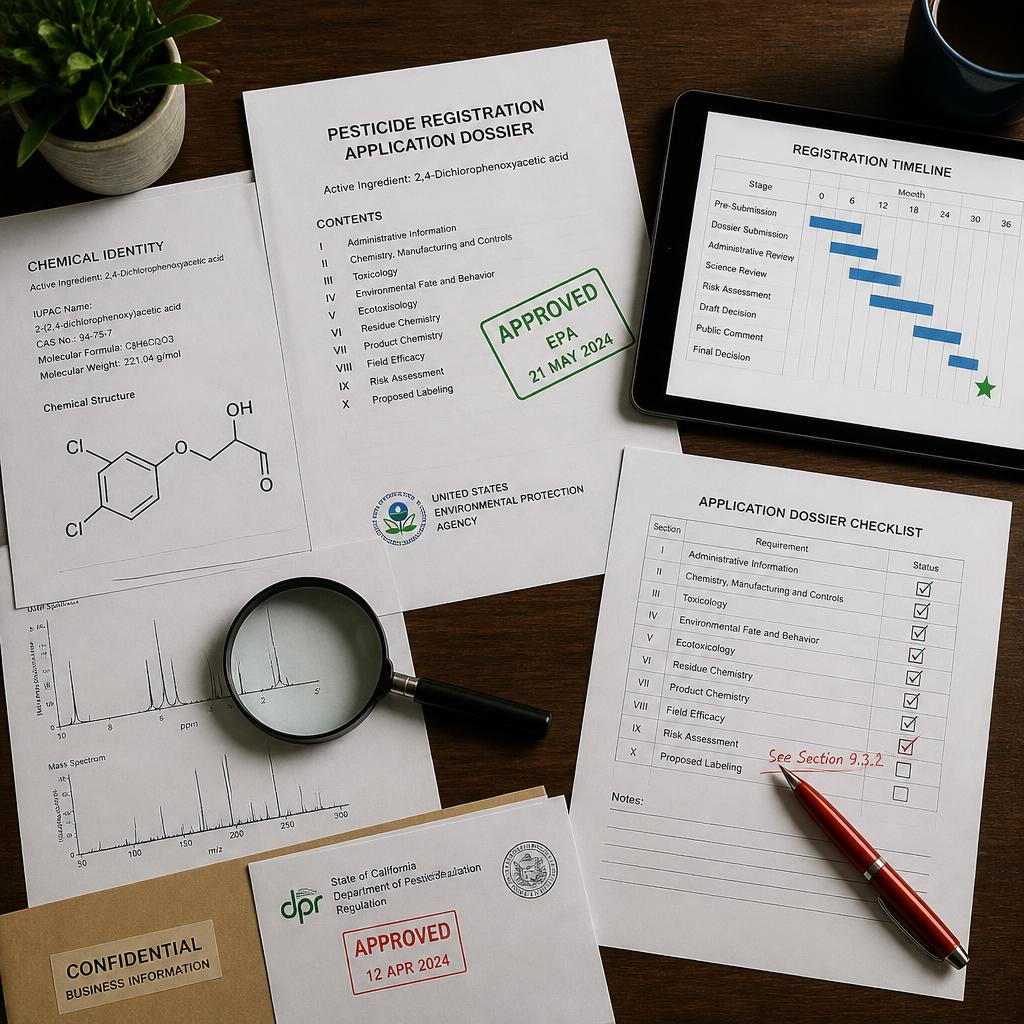
Third, the registration file. The ACID gate and the registration gate do not talk to each other. The technical still needs its own registration with the Agricultural Pesticides Committee, the APC, under the Ministry of Agriculture and Land Reclamation, and that file names a specific source: the manufacturing site, the specification, the batch analysis behind it. The CoA that travels with the shipment has to read like the specification in the registration file — same active content, same impurity limits, same source. A CoA from a different plant gives customs and the registration authority a reason to stop the file and ask questions. Registration data is confirmed item by item.
Fourth, legalisation. The commercial invoice and certificate of origin need consular legalisation, and that happens in China, not in Cairo. Build it into the timeline before the cargo is booked, not after: legalisation is the step most often left to the last week, and it is the step with the least room to hurry.
Fifth, the timing. File the ACI data before loading, not at loading. Work backwards from the formulation schedule — production, export clearance, transit, customs, the registration check — and put a buffer on the step you control least, which is usually the paperwork at the origin end. A registration that lapses a week before the vessel arrives is not a paperwork problem; it is a missed season.
The mistakes we see most
The common failures are unglamorous. The ACID filed against a draft invoice, then the final invoice carries a different weight. The CoA for a batch that is not the batch in the drums. The exporter who discovers at booking that their CargoX registration was never completed. The importer whose GOEIC scope covers fertiliser but not pesticides. None of these is a product problem, and all of them cost more than the product ever would — demurrage at Alexandria or Damietta, a missed formulation slot, a season that does not wait.
Egypt is a serious market for technical materials — large cotton, vegetable and fruit sectors, and formulators who know what they want. The buyers who do well there are not the ones with the sharpest price. They are the ones whose file is complete before the vessel sails. Our Egypt import guide covers both gates in full, and the Turkey guide shows how the same file behaves in a different system. If you are lining up a shipment, send us the molecule and the source and we will work through the ACID, registration and timing questions with you — while there is still room in the calendar to fix them.
Frequently asked questions
What is an ACID number in Egypt?
The Advance Cargo Information Declaration number, issued through the NAFEZA platform before cargo is loaded. The exporter files cargo data against it on CargoX, and the number must appear on the shipping documents.
Who files the ACID — the importer or the exporter?
The Egyptian importer obtains the ACID on NAFEZA; the foreign exporter registers on CargoX and uploads the cargo documents. Both steps must be complete before loading.
Does ACID apply to air freight as well as sea freight?
Yes. Sea freight has used ACI since October 2021, and air cargo came under the system from 1 January 2026.
Does an ACID number replace pesticide registration in Egypt?
No. ACID is the customs gate; the technical still needs its own registration with the APC, tied to a named manufacturing source. Both gates must be satisfied.