Public Health Insecticide Actives: Sourcing Guide for Vector Control Programmes
TL;DR — Permethrin, tetramethrin, deltamethrin and d-allethrin power municipal fogging, IRS and household insecticide manufacturing. Here is how tender buyers and formulators should source each one in 2026.
In this article
Public health insecticide sourcing is a different discipline from agricultural sourcing. The buyers are municipalities, health ministries, tender agents and household-insecticide manufacturers; the specifications are set by WHO rather than by an agriculture ministry; and the failure mode is not a lost yield but a failed tender or a resistance breakdown in a live dengue or malaria season. This guide covers the four actives that carry most of the volume — permethrin, tetramethrin, deltamethrin and d-allethrin — and what each one demands from a supplier.
Permethrin: the volume backbone
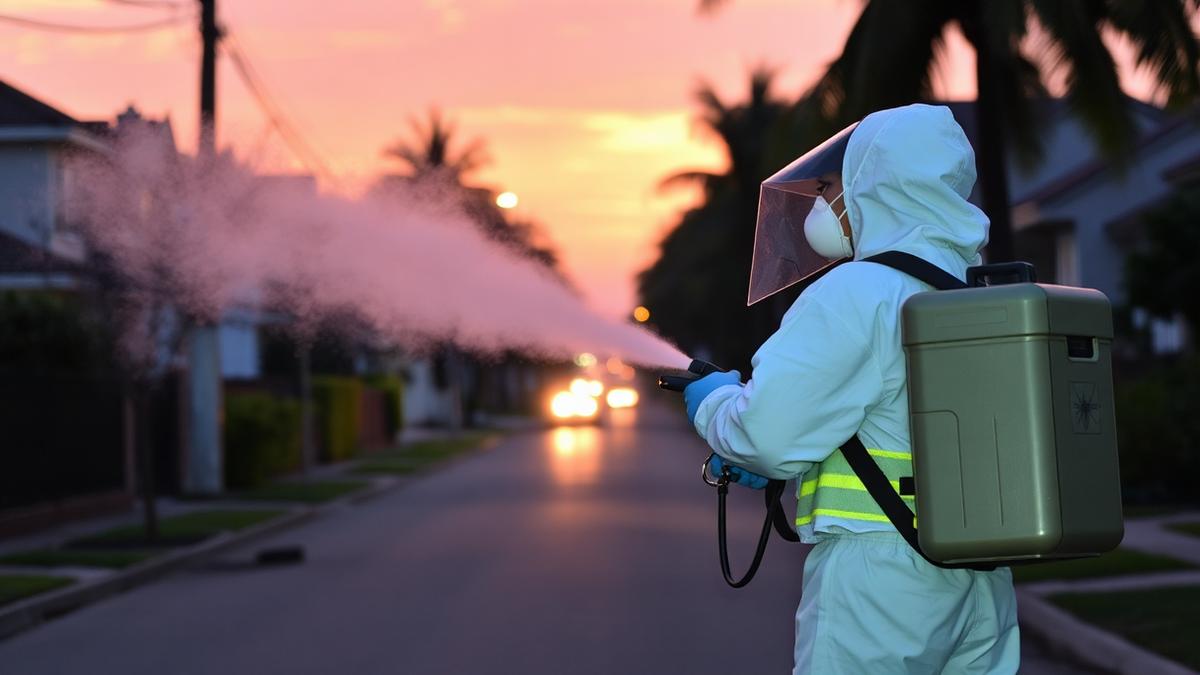
Permethrin remains the highest-volume public health pyrethroid, running through ULV fogging concentrates, treated fabrics, veterinary ectoparasiticides and institutional residual sprays. The specification that matters is the cis:trans ratio: 25:75 permethrin is the standard for space spraying and fabric treatment, while 40:60 is preferred where residual activity on surfaces matters more than knockdown. Chinese permethrin 94–96% TC trades at USD 13–17/kg FOB in Q3 2026 depending on isomer ratio. Buy from a plant that states the ratio on every certificate of analysis, not on the technical data sheet only. Product details are on our permethrin TC page.
Tetramethrin and d-allethrin: the knockdown pair
Tetramethrin is a fast knockdown agent with almost no residual activity — which is precisely its job. It is the active behind most aerosol sprays, mosquito coils and household liquid vaporisers, almost always paired with a residual pyrethroid and with piperonyl butoxide as a synergist. D-allethrin plays the same role in coils and mats at lower loading. For both, the sourcing risks are stability and isomer content rather than raw assay: tetramethrin degrades under heat and UV, so ask for accelerated stability data at 54 °C and confirm packaging is opaque and nitrogen-flushed for long ocean transits into Gulf and African summer conditions. See tetramethrin TC for spec details.
Deltamethrin: the tender active
Deltamethrin dominates WHO-driven programme procurement — indoor residual spraying at 20–25 mg a.i./m², long-lasting insecticidal nets at 55 mg/m², and increasingly the residual half of combination fogging products. It is the active where WHO prequalification and FAO/WHO specification compliance matter most, and where a supplier's documentation quality decides whether your tender bid is accepted. Our deltamethrin supplier guide covers purity grades and isomer specification in detail.
Resistance management is a procurement question
Pyrethroid resistance in Aedes aegypti and Anopheles gambiae populations is widespread and well documented. That makes mode-of-action rotation a procurement responsibility, not just an operational one: a programme buying only pyrethroids for five consecutive seasons is buying declining efficacy. Serious tender specifications now interleave organophosphate and neonicotinoid actives, and pair pyrethroids with PBO synergist in both net and spray formats. When you build a multi-year supply position, build the rotation into the contract structure — not into next year's emergency purchase.
Documentation that decides tenders
Public health tenders reject on paperwork far more often than on price. The minimum package is: FAO/WHO specification compliance statement, five-batch analysis with full impurity profile, accelerated and real-time stability data, WHOPES or WHO prequalification evidence where the format requires it, GHS-compliant MSDS in the tender language, DG declaration and UN packing certification for ocean freight, and a certificate of origin acceptable to the destination customs authority. Assemble this before the tender opens, not after. Our supplier hub buyer guide sets out the full document checklist and the sample-to-order sequence.
How WECON supports vector control buyers
We supply permethrin, tetramethrin, deltamethrin, d-allethrin and cypermethrin technical material and matched ULV, EC, SC and WP formats from MEE-permitted Chinese plants, with tender-ready documentation packages, DG-compliant export handling out of Chinese ports, and Arabic, Turkish, French and English labelling support. Full active list and formats are on our public health insecticides page; send your tender specification and destination port and we will return a documented quote within 24 hours.
Frequently asked questions
Which active ingredients are used in public health vector control?
The core set is pyrethroid: permethrin for ULV fogging and fabric treatment, deltamethrin for indoor residual spraying and treated nets, tetramethrin and d-allethrin for knockdown in aerosols, coils and vaporisers. Organophosphates and neonicotinoids are increasingly added for mode-of-action rotation.
What permethrin cis:trans ratio should a fogging concentrate use?
25:75 cis:trans is the standard for space spraying and fabric treatment because it favours knockdown; 40:60 is preferred where residual surface activity matters more. Always require the ratio on the batch certificate of analysis, not just the technical data sheet.
Do public health actives need WHO prequalification?
Prequalification is required for specific formats such as long-lasting insecticidal nets and for many donor-funded programmes. For municipal fogging and household products it is usually not mandatory, but FAO/WHO specification compliance and a full impurity profile are still expected in serious tenders.
How should a programme manage pyrethroid resistance?
Rotate modes of action across seasons rather than relying on pyrethroids alone, and use PBO synergist formats where metabolic resistance is documented. Build the rotation into multi-year supply contracts so alternative chemistry is available before efficacy drops.
What documentation is needed for a public health insecticide tender?
FAO/WHO specification compliance, five-batch analysis with impurity profile, accelerated and real-time stability data, WHO prequalification evidence where applicable, GHS MSDS in the tender language, DG declaration with UN packing certification, and a certificate of origin.