Technical Material vs Formulations: A Buyer's Guide to TC, EC, SC, WG & More
TL;DR — TC, EC, SC, WP, WG, OD — what each formulation actually is, when to use it, and how to pick the right one for your market and crop.
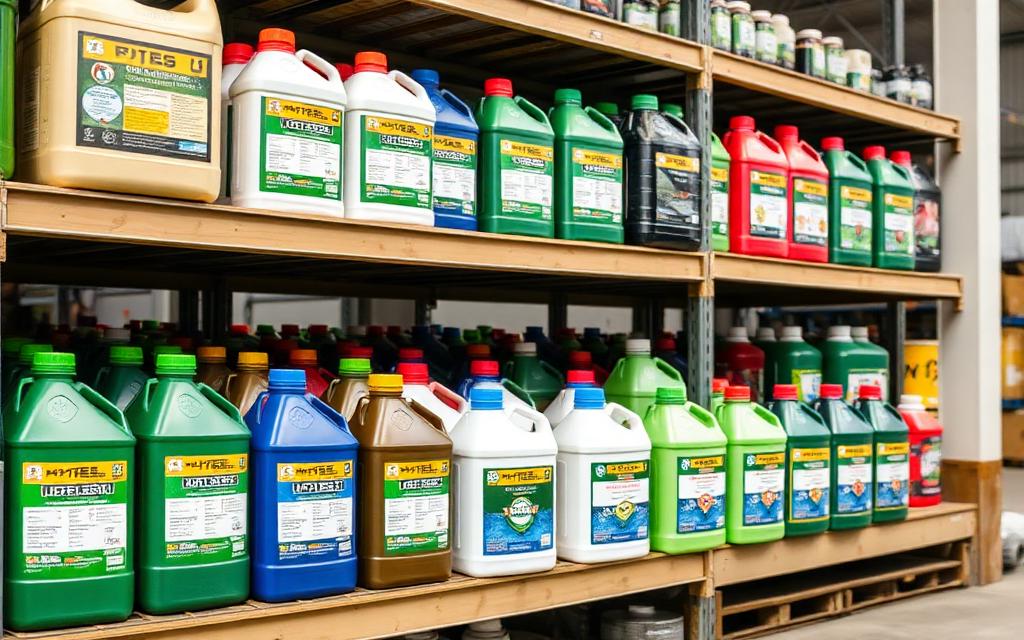
Every agrochemical product on a retail shelf started life as technical material — a high-purity active ingredient, typically 90–98% pure, manufactured in crystalline or liquid form. Technical material (TC) is the raw chemistry. Formulations are what farmers actually spray, dust, or drench. Understanding the difference between TC and the half-dozen common formulation types is the foundation of every sourcing decision a formulator, distributor, or importer makes.
Technical material (TC). TC is the active ingredient at maximum practical purity. It's the form that gets shipped from manufacturer to formulator, registered as the underlying chemistry, and tested for the impurity profile that defines a product's regulatory identity. TC pricing is the benchmark for the whole value chain — when glyphosate 95% TC moves USD 1,000/ton at the ex-China gate, every downstream SL, EC, and WG repositions within weeks. Buyers sourcing TC need to verify three things: assay (the percentage of active), impurity profile (which impurities are present, at what level), and traceability (named manufacturer, named plant, batch records).
Emulsifiable concentrate (EC). The classic liquid formulation: active ingredient dissolved in an organic solvent (xylene, solvent naphtha, or modern alternatives like methyl oleate) with emulsifiers that let it mix with water in the spray tank. ECs are simple, cheap to formulate, and stable, but they're flammable, can have solvent odor, and are increasingly restricted in markets pushing toward water-based chemistry. Most pyrethroid insecticides still ship widely as EC in the Middle East and North Africa.
Suspension concentrate (SC). Active ingredient milled to micrometer-size particles and suspended in water with wetting agents, dispersants, and anti-settling polymers. SCs are non-flammable, low-odor, and gentler on applicators — the modern preferred form for fungicides like azoxystrobin and tebuconazole, and for many neonicotinoids. Formulation is more demanding (particle size, viscosity, freeze-thaw stability) but the product is cleaner in every direction.
Wettable powder (WP) and water-dispersible granule (WG). Solid formulations where the active is blended with inert carriers (kaolin, silica) and surfactants. WPs are the older technology — dusty, harder to measure, and worker-exposure prone. WGs are the modern replacement: dust-free granules that disperse cleanly when added to water. Triazole fungicides, sulfonylurea herbicides, and many co-formulated products now ship as WG by default.
Oil dispersion (OD), capsule suspension (CS), and emulsion in water (EW). The premium formulation tier. ODs replace EC solvent with vegetable or mineral oil — bee-friendlier and lower odour. CS encapsulates the active in polymer microcapsules for controlled release and reduced applicator exposure (the standard for high-tox actives like lambda-cyhalothrin in the EU). EW is an oil-in-water emulsion that delivers EC-like efficacy without the flammability. These cost 15–30% more to formulate but win in regulated markets and premium-positioned brands.
How to pick. Match the formulation to three things: the regulator (some markets restrict EC for specific actives), the crop and application equipment (drip irrigation favors SC and SL; aerial application often needs OD), and the end-user (smallholder markets in Africa still buy mostly EC and WP on price; protected horticulture in Turkey is moving fast toward SC and WG). Working backwards from those three constraints — rather than starting from "what TC is cheapest this month" — is what separates registrants who build durable product lines from importers who chase quarterly margin.
WECON supplies both TC and finished formulations across the full range above, working with formulation plants in Turkey, the Gulf, and Central Asia. If you're scoping a new SKU or evaluating a switch from EC to SC/OD on an existing one, talk to us — we can match the right manufacturer and the right formulation type to your registration constraints and end-market positioning.